Perhaps I am fortunate to have an everyday life like this.
I came back to Liverpool excited to take my friends to a few restaurants I used to love. Then I found that some had closed, and some of their owners had retired. I still remembered those places, but I could no longer follow those memories and take my friends back for another meal.
It is often through small things like these that we notice the passage of time.
A large part of why I chose to study at the University of Liverpool was my love for Liverpool and Klopp. The first thing I did after arriving in the city was take a bus to Anfield. I hurried towards the ground, eyes shining, wanting to photograph everything I saw. The fans who travel a long way and feel that everything in front of them deserves to be remembered are not strangers to me—I used to be one of them.
In 2020, before the pandemic began, the teams of Klopp and Simeone met here. My two favourite managers stood beside the same pitch. I can still recall the excitement of that night clearly. It remains the best match I have ever watched in person.
Coming back now, I find the two teams in very different circumstances. Since Klopp left, some of my passion for Liverpool has faded. The team still carries the familiar name, but what moves me is no longer quite what it once was. I know that I have changed too.
Yet I have never been able to let go of this city. I studied there and lived there. A decision made out of love for a football club became a real part of my life. Now it is difficult to think of Liverpool and think only of football: I also think of the person I was when I first arrived in England, impatient to board that bus, and of the days I later spent here. Klopp has left, but those memories will not leave with him. Feeling a little less passionate about the team does not mean the city matters any less to me.
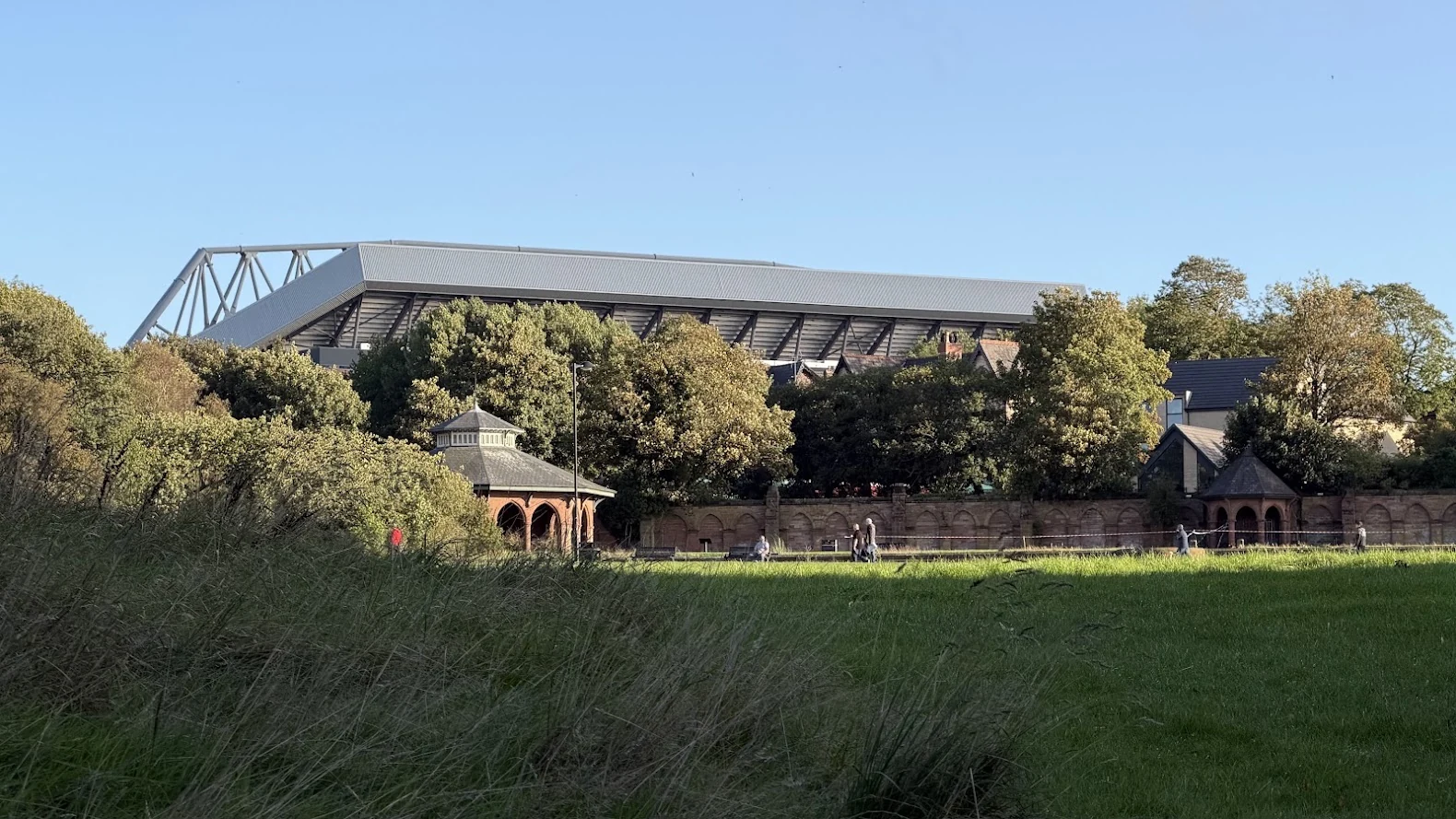
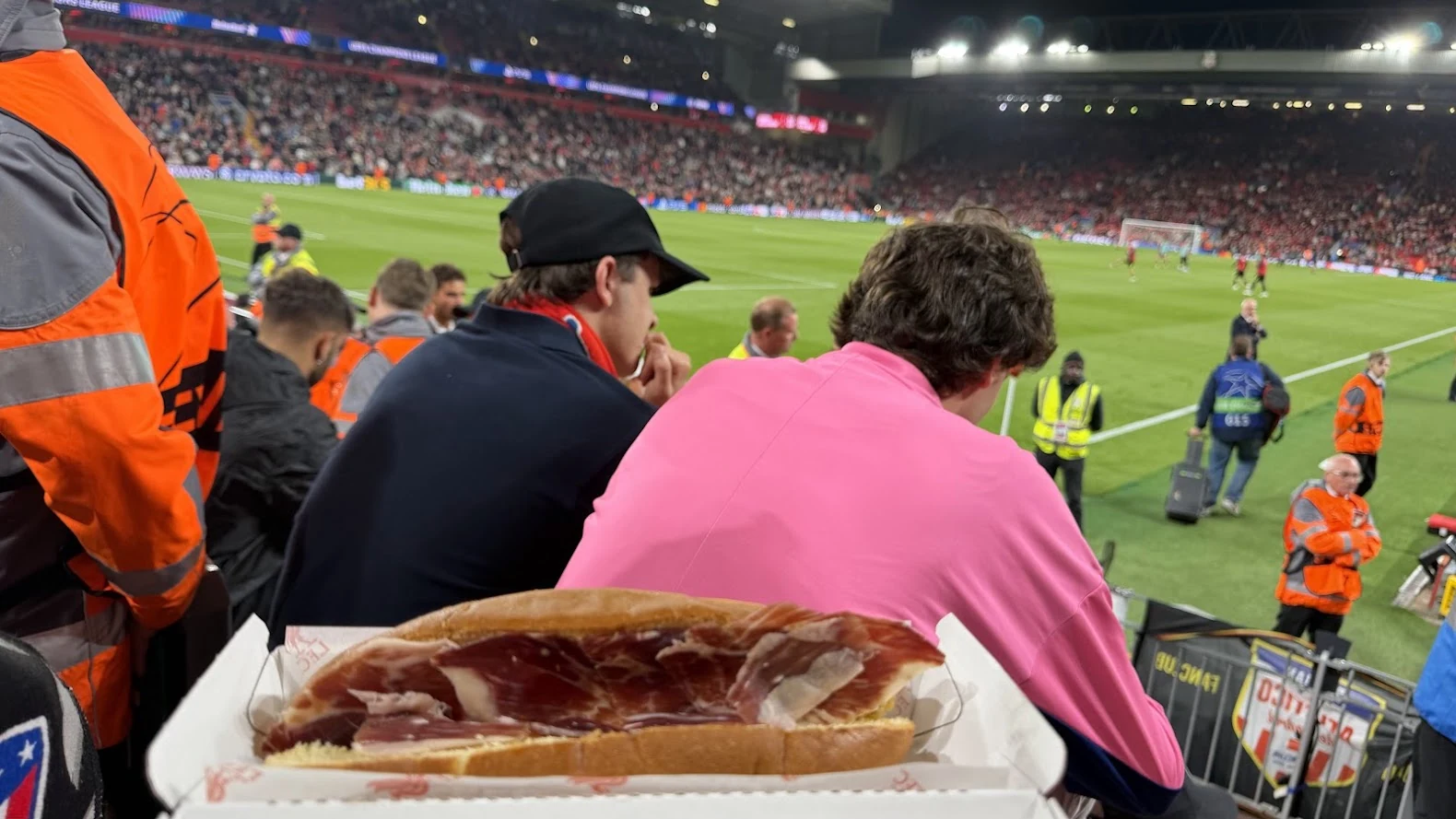
Before the match this time, I did not join the march with the other away fans. I had walked those streets several times already, so two friends and I went for a wander in the park behind the ground instead. We ate the ham we had brought along as we walked, and saw Anfield’s roof beyond the grass and trees. Approaching a familiar place from another direction, I found a beauty I had never noticed before.
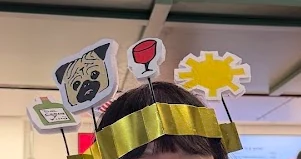
I was wearing my Llorente shirt, and a friend had even made a Llorente-themed hat. The sun, red wine, Atlético, sunscreen and Llorente’s dog, Anfield, had all become little decorations on top of it. When Atlético come to Liverpool, of course Llorente has to get a mention. But the day was made lovely by this kind of thought and playfulness from a friend too.
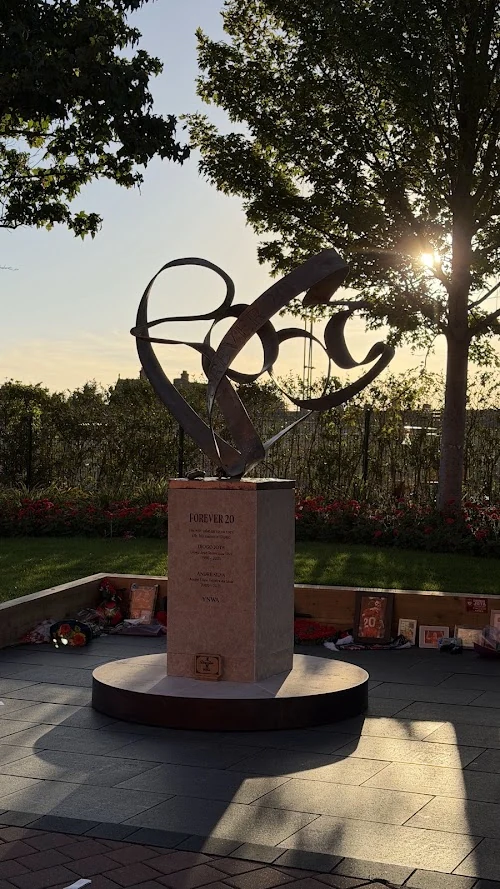
We also visited “Forever 20”, the memorial to Jota and his brother André Silva. Around this time last year, I was here to watch Liverpool too; the place where people came to mourn was covered in flowers. Now a memorial stands in the garden. The flowers are still there, and sunlight filters through the leaves onto its base and the ground. It was beautiful, but it was difficult to see it as just a view. Klopp’s departure had allowed a goodbye; a loss as sudden as this offered no time to prepare. Standing there, I felt that perhaps an era belonging to this team really had come to an end.
The match was still a good one, especially in the first half. Llorente scored at Anfield again. Álvarez played a through ball, and he ran in behind the defence to put Atlético ahead.
But Ngumoha kept attacking his flank. Tracking back, contesting the ball, then having to keep up all over again when the next attack came. From the stands, Atlético began to look increasingly stretched after forty minutes. Llorente has excellent pace and stamina, but under that sustained pressure, he was finding it harder to match Ngumoha’s quick feet. The move that put Liverpool ahead in the second half also began with Ngumoha breaking down the left. Watching him in person made his quality especially clear.
At half-time, the ham we had brought came in useful again. I bought a hot dog at the ground, ate the sausage first, kept the bread and filled it with ham: a bocadillo made right there at Anfield. After so many visits, it turns out that the match is not the only thing I look forward to. There is also the question of whether we can enjoy this half-time meal together.
I still watch these details closely, and the turns of a match still affect my mood. But I am less consumed by the result than I used to be. Once you have been through certain things and know something of what to expect, they no longer feel quite so difficult to accept each time. After the final whistle, there is still dinner with friends, a conversation about a few passages of play, and then things that have nothing to do with football. Winning and losing still matter, but they need not decide the whole evening.
For many fans from overseas, coming here to watch a match is a once-in-a-lifetime experience. I once felt that excitement too. Now, though, I am fortunate enough to let these once-in-a-lifetime experiences gradually become part of my everyday life. I do not have to be as impatient as I was then to still want to come back, watch football with friends and wander around. When the old restaurants close, we find new places; beyond the people we already know, there are always new friends to meet.
I still love returning to Anfield. A return just does not have to feel like a first encounter every time. The old places have closed, but my friends are still beside me, and we can still decide where to go next.
Highlights
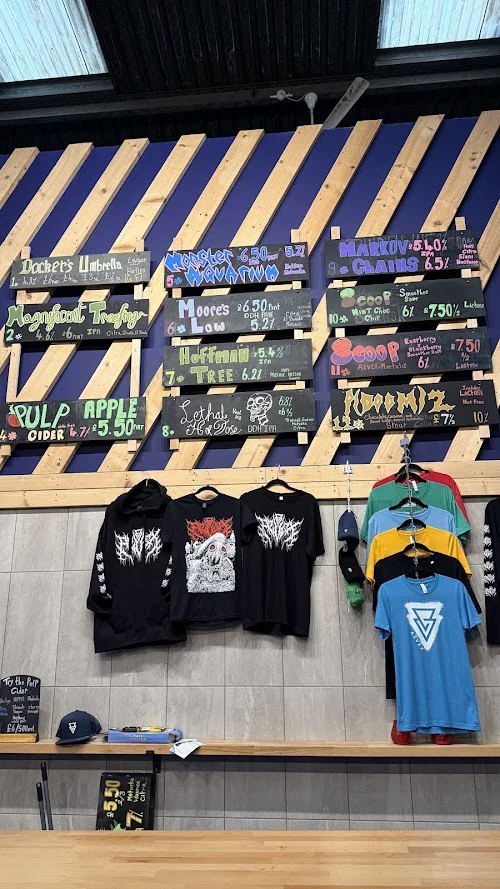
Azvex: a beer menu I wanted to work my way through
In Liverpool, I would recommend a visit to Azvex to anyone who likes beer. This time we tried a mint-chocolate smoothie sour, as well as a coffee-flavoured beer. Those flavours alone made it worth a special trip.
Better still, every name on the beer menu that day had something to do with computing. Looking at them, I was left with essentially one thought: I wanted to work my way through them all. There is not much more to say.

A railway story in the cemetery
While visiting Liverpool Cathedral, we also walked down into St James Cemetery below it. A large monument caught our attention. Looking it up, we discovered that it commemorates William Huskisson, the Liverpool MP who supported the construction of the Liverpool–Manchester Railway.
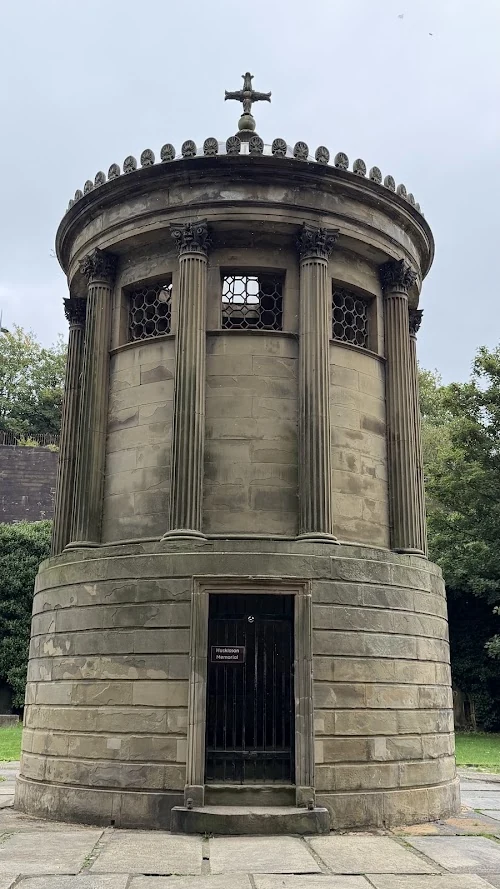
At the railway’s opening ceremony in 1830, the train stopped along the way to take on water. Huskisson got out and approached the Prime Minister, the Duke of Wellington, with whom he had been at odds, hoping to make peace. While they were talking, Rocket came along the other track and struck him. He died that evening. A man who had helped advance the railway died in a railway accident on the day it opened: it was difficult to know what to make of that history.
Looking at the monument, a friend asked, “Why didn’t they build it in the shape of a train?” I said, “If I were a member of his family, I’d never want to see anything to do with trains again.”
Walker Art Gallery: winter inside a painting
Walker Art Gallery is well worth a visit too. The collection is rich, and the thread running through the displays is clear. Taking your time, you can do more than recognise familiar artists: you can also see the connections between their works.
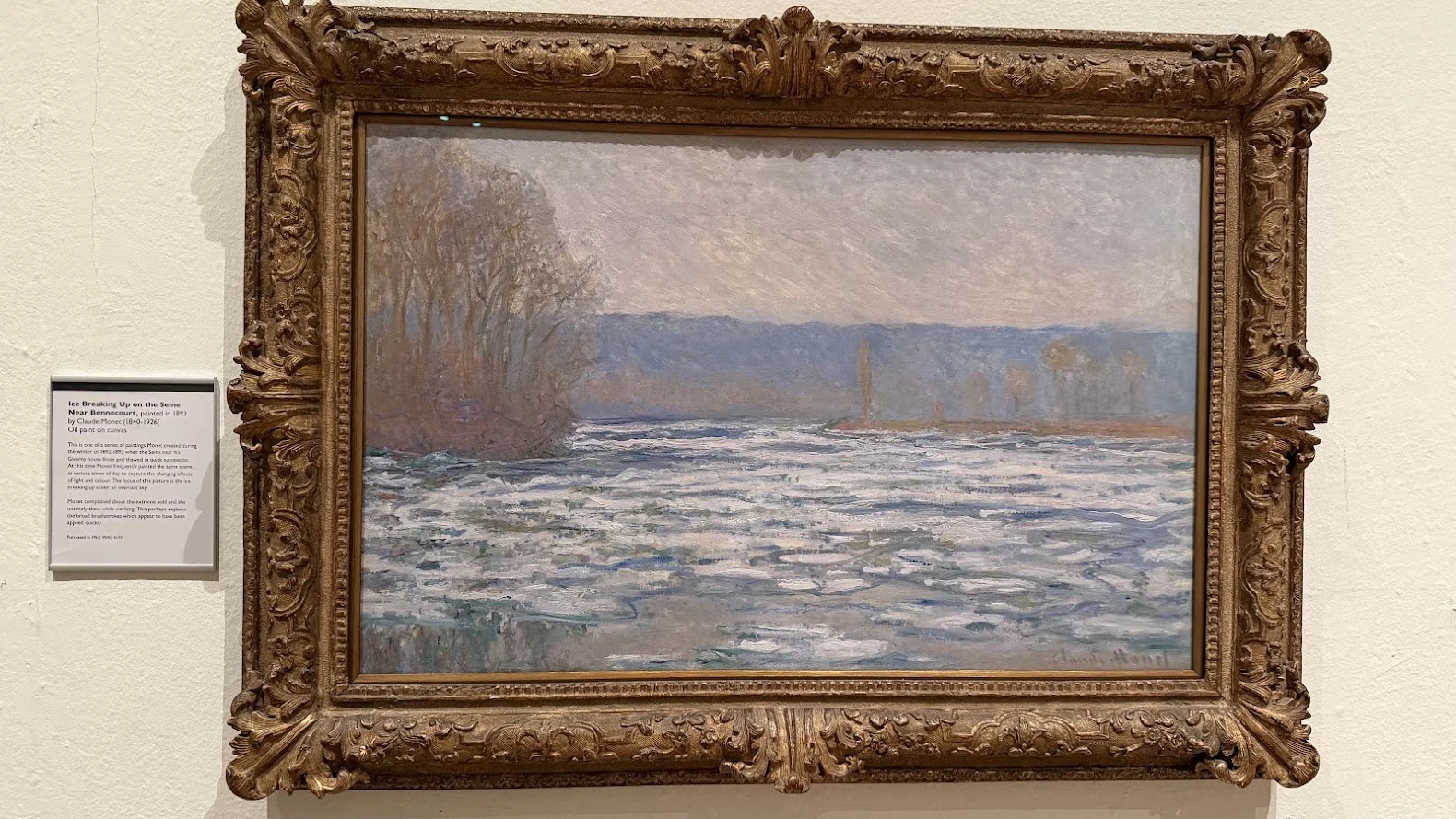
Monet’s Ice Breaking Up on the Seine near Bennecourt was particularly interesting. The collection notes mention that he complained about the cold while painting this series; the broad brushstrokes, seemingly laid down in haste, may also have something to do with the conditions in which he worked. Even the winter inside a famous painting could be unbearably cold for its painter. If you are interested in art, it is well worth setting aside some time for this gallery.