
List of series articles:
During the Klopp period, Liverpool players were famous for their high output rate (Workrate, which refers to the degree of physical exertion of players when running on the field). These players can continue to perform high-intensity sprints on the court, making the opponent exhausted, thereby tearing the opponent's defense and causing damage. So, how do we find such players through physical-performance data?
An effective method is to analyze the 5-minute maximum intensity interval based on high-speed running (HSR) and sprint (SPR). By analyzing the data of European Championship in 2024, we can use ternary diagram To visualize the proportion of HSR, SPR and other runs (OTH) during a player's 5 minutes of highest intensity. This approach allows us to classify a player's output in high-intensity situations from a physical performance perspective.
For example, if the club needs a forward who can counterattack from the center and back from a long distance, then they will give priority to players who are good at sprinting; if the team needs a forward to press on the front line and counterattack on the spot, then the HSR during the continuous pressure and the SPR required during the counterattack will be equally important; and for a defensive midfielder who needs to actively cover the front, middle and back three lines under pressure, HSR will be a key indicator to measure his short-term coverage ability.
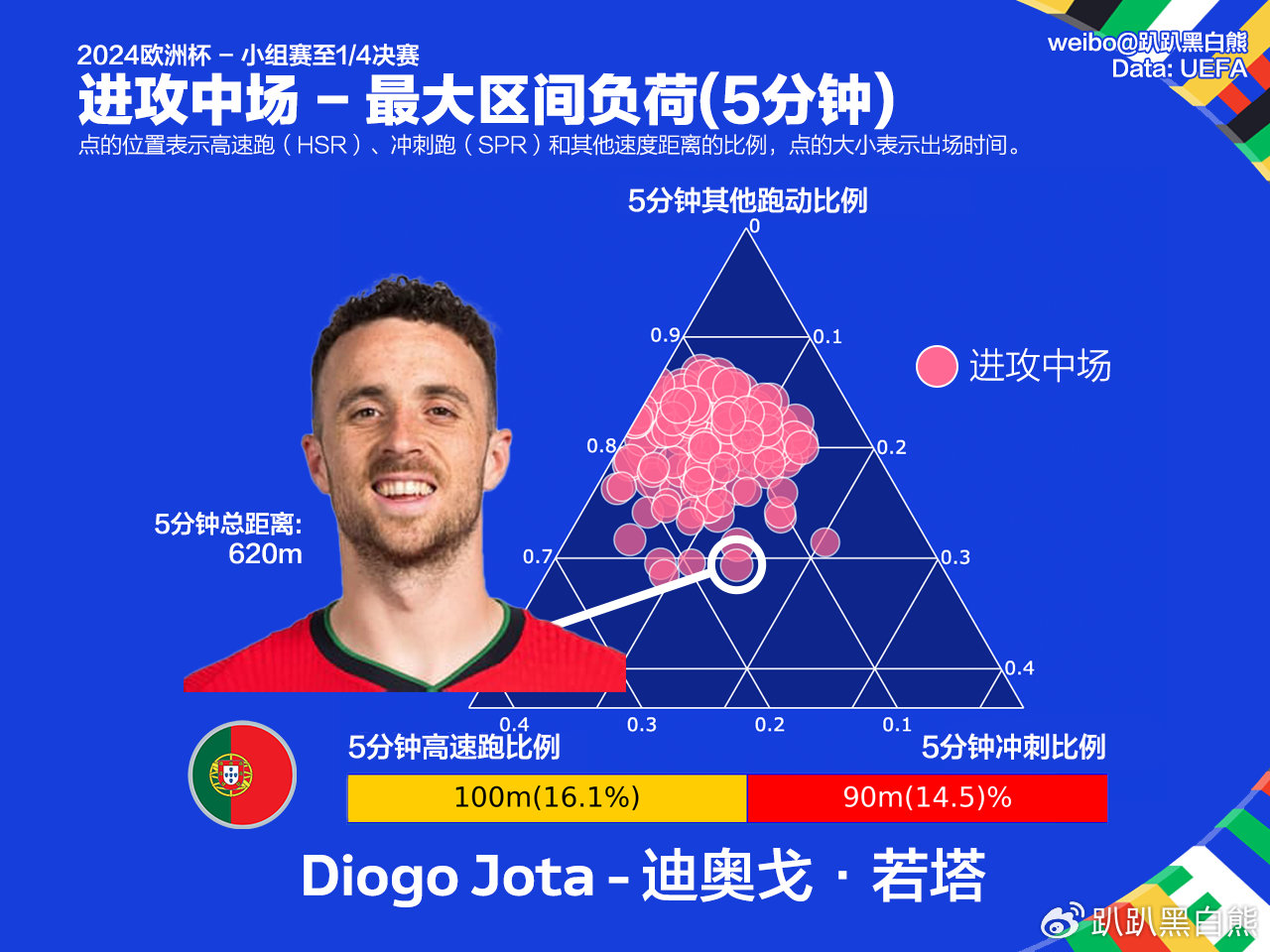
Take Jota as an example. As of the European Championship quarter-finals, he is the player with the longest HSR+SPR distance in 5 minutes among the offensive midfielders. His maximum interval load occurred at the end of the second half of European ChampionshipMD4 (1/8 finals). We can see from the picture that his HSR and SPR running distances are close, and together they account for more than 30% of the total distance in 5 minutes. In these 5 minutes, he is not only responsible for connecting and advancing on the left side, but when the whole team is pressing forward, he will even retreat to the back line to cover.
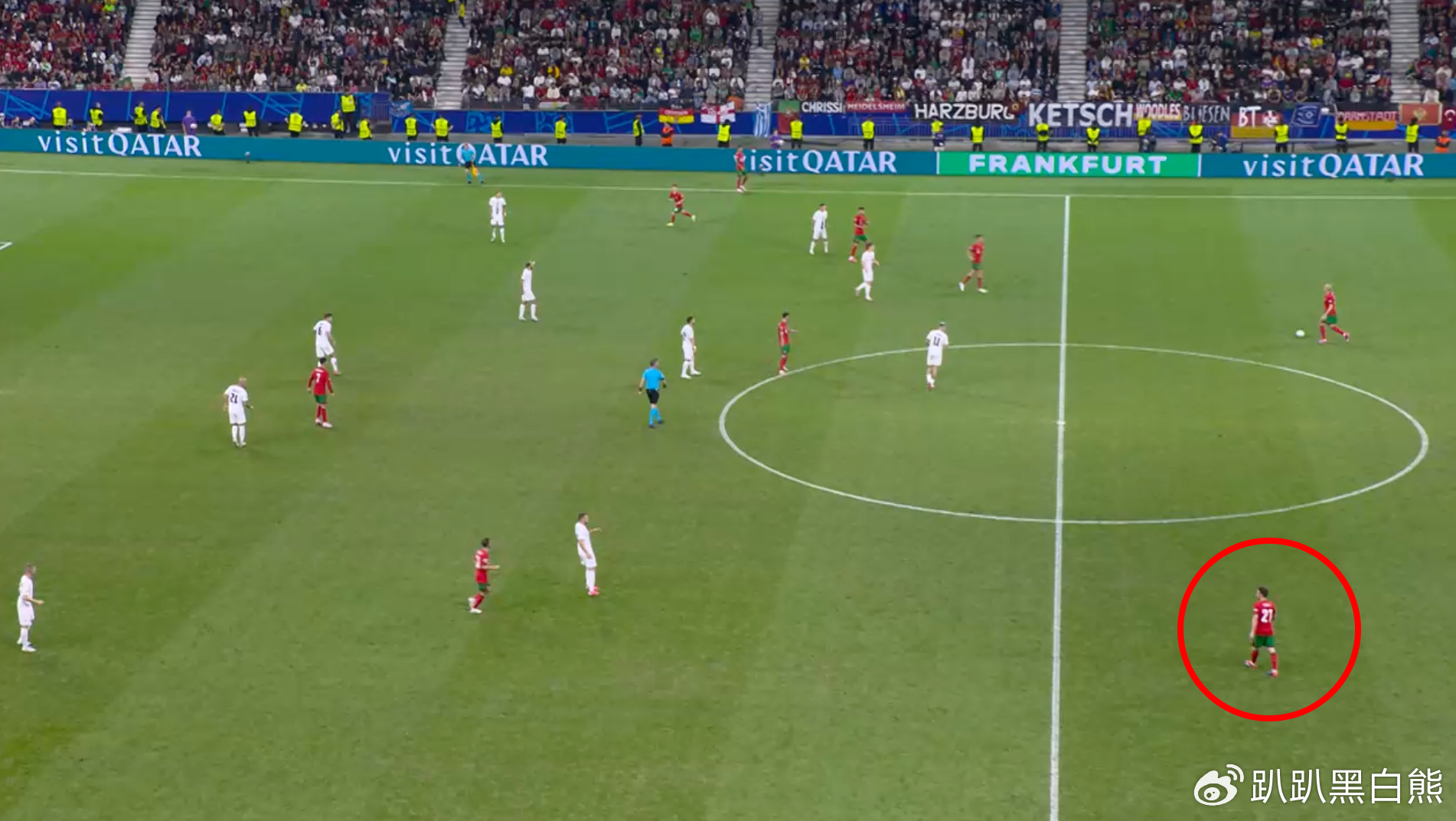
Who can not love such a comprehensive player?
Traditional scouts mainly rely on event data. These data are easy to obtain and have been widely used for many years. They have accumulated a lot of experience, but they have always lacked quantitative methods for players' external physical performance. As optical tracking technology matures, it is no longer a dream to introduce physical performance data into scouting work. With the explosion of computer vision technology and the reduction of computing costs, it has become affordable for more clubs and institutions. This allows the team's sports department to evaluate the potential of players from a perspective that is more in line with the fundamentals of competitive sports.
Although there is no perfect data and optical tracking has its limitations, it is still a reliable method to help realize the team strategy designed by the coach and ultimately help the club achieve success.