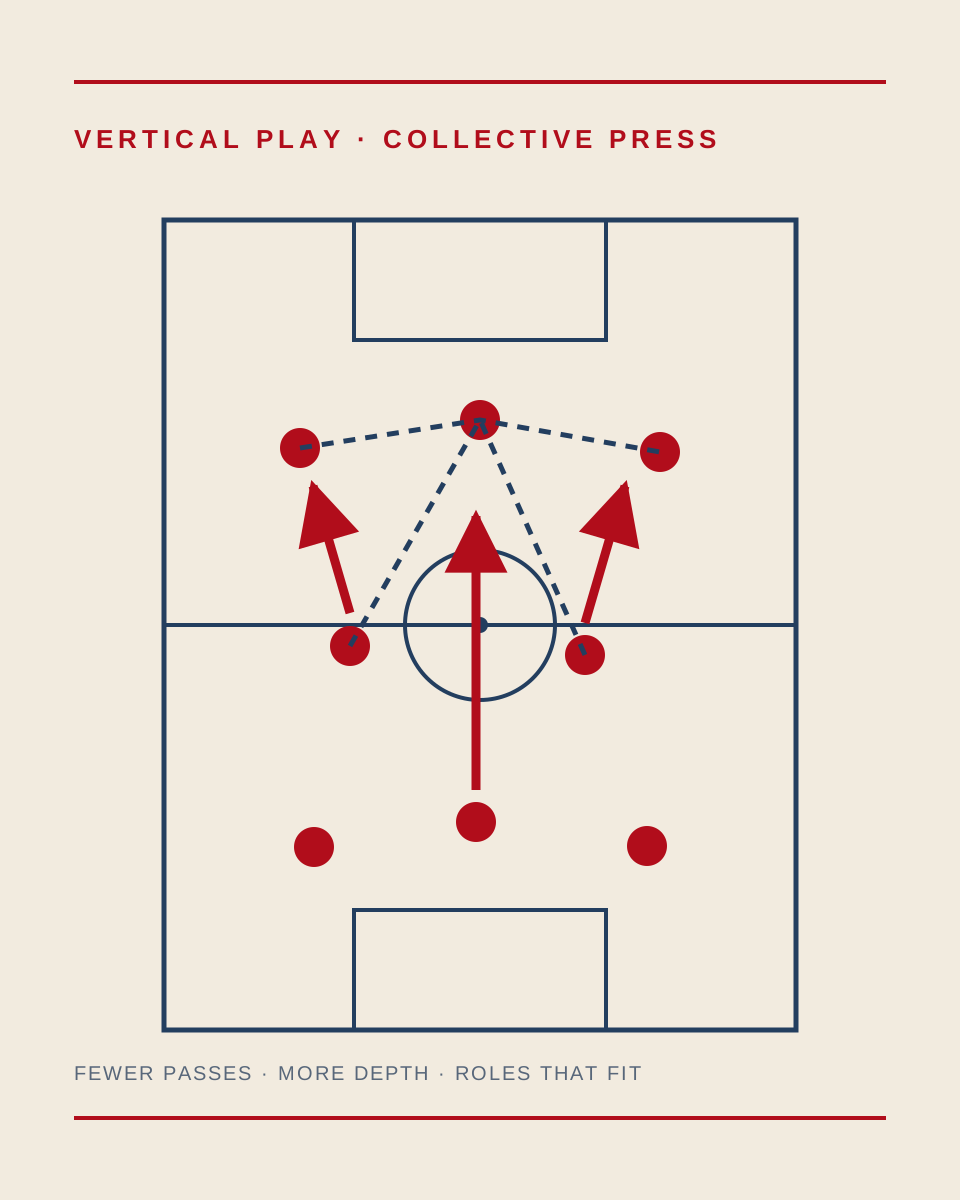
Since Matallazo joined Real Sociedad, the whole team's spirit has been rejuvenated, turning it once again into a competitive and happy team. More importantly, the outstanding players who were already in the squad have each been placed in more suitable functional positions and reactivated one by one. For a mid-season managerial change, this is the highest praise. Some of the key players had previously fallen into slumps, and some had even faded from the main spotlight, but now they have all returned to center stage. Each specific case can actually be discussed further: are player performances more a matter of individual responsibility, or are they related to the tactical system and the collective environment? Let's first go back to the very context in which the decision to change managers was made. The Imanol Alguacil era ended last summer. When a figure of epoch-making significance in the 21st-century history of Real Sociedad departs, all the pressure naturally falls on President Jokin Aperribay and Sporting Director Erik Bretos. Initially, the club chose a continuity route by promoting internally, appointing B-team coach Sergio Francisco. Erik's role in Real Sociedad's sports management is also similar to Sergio Francisco's role on the coaching bench; he had originally been alongside Olabe, and after Olabe left San Sebastián, he took over the position. For Erik, the coach is a critical decision in which he cannot afford to make mistakes, otherwise the status that Real Sociedad has painstakingly cultivated over many years would be lost. Sergio can be considered a very adaptable coach. In the Zubieta youth system, frequent movement between the youth squads and the first team is normal, and he is accustomed to exceeding targets in an environment of extreme personnel uncertainty. Compared with the highly principled, even somewhat stubborn Alguacil, Francisco is more pragmatic and also more flexible. Sergio was well-versed in the club's traditions, but he was also very clear about his true task: to extract existing resources, maximize returns, and ensure the team remained in contention for European competitions. However, in the summer transfer window of 2025, Real Sociedad's recruitment efforts did not go smoothly; many Plan A transfers fell through, Plan B signings were not necessarily achievable, and they even had to fall back to Plan C options. This led to Real Sociedad appearing as a collection of uncertainties by the end of the summer window. When Sergio's gentle reform approach became unsustainable, the club reached a point where decisive action was necessary, and it had to move forward. Moreover, at that moment, there was no immediate replacement within the Real Sociedad ecosystem, or even the Basque ecosystem itself. If Jagoba Arrasate had already left Mallorca, he would have been a natural successor. But the problem was, he didn’t exist. Real Sociedad had no choice but to look outside the circle, and Martirazo, a coach who had never managed in La Liga before, initially set off alarm bells within the Real Sociedad environment. However, Eric clearly knew what he wanted. Martirazo quickly gained trust through his training methods, his management style, and especially his internal and player communication management. The transition period during Christmas was also very helpful, as Martirazo had a full winter training period to work closely with the players and adjust the details. Martirazo worked hard to bring everyone into the rhythm of actual competition, making the squad as large as possible and ensuring that everyone had a role to play. As a result, in 2026, Real Sociedad took off again. They managed only 17 points in the first 17 rounds before he took over, but by round 26, their points had doubled. After even overturning Alavés in the Copa del Rey, they regained their comeback gene. The foundation of confidence came from tactical changes. Compared to Sergio, Martirazo advocated a more aggressive style, reducing inefficient possession and instead pursuing vertical passes and frequent duels. This detailed and layered pressing allowed the team to remain highly aggressive even in adverse situations, such as playing with red cards or conceding first. In contrast, Sergio's later matches were too textbook and fell into the trap of possession for the sake of possession. When players endure the strain of high-intensity pressing on the field but still respond with slow lateral passes during counterattacks, it inevitably creates cognitive dissonance. Matallazo's match model perfectly aligns with his slogan 'believe, press, bite.' Under Matallazo, Real Sociedad's possession rate dropped to 42%, which is rare in the club's history, but the number of passes needed to score was cut in half. In the past, Real Sociedad always tried to score through meticulous passing; now, with just a simple two- or three-pass combination and a sharp run, they can directly penetrate critical areas of the penalty box. Real Sociedad is very good at occupying spaces in the box. Players like Braiss Mendes or Sutchic, who act as free spirits in the attacking front, disturb the opponent's defense from the shadow striker position. This is in line with the club's recent tendency toward German/Central European transfer styles—from Sutchic to Isak in the past, Merino who played at Borussia Dortmund, all the way to Yanghel. That kind of explosive, lightning-fast rhythm is exactly what Real Sociedad has been aiming for in recent years, and Matallazo's system serves as the framework to unleash the talents of these players. Matallazo tells them to press after losing the ball because two-pass plays can create chances, and this is exactly what they execute on the field. In the match against Celta, the second goal came from Hugo's mistake; a two-pass break through, and Oyarzabal finished it. The same goes for matches against Osasuna and Alavés. Once the game flows, convincing the players becomes very easy. Real Sociedad's defense now relies more on one-on-one marking; the defenders are not natural zonal defense masters; they excel in duels. Defenders like Martin, Aranburu, and Zubeldia, who are strong in duels, are more suited to this aggressive defensive system and benefit greatly from it. Although there is also the occasional risk that Charly Char might go in too aggressively and receive a red card, these risks are the ones known to occur by design—they are errors from overcommitment, not basic mistakes like losing focus, poor positioning, or failing offside traps. Sergio actually wants to play this way too, for example, in the Basque derby against Bilbao. But the difference is that he wants to, yet often can't. Matarraso's team, however, can. The Real Sociedad of 2025 seemed to be in a constant state of self-denial. The Real Sociedad of 2026, by shaking off the heavy shackles of 'must finish fourth, must outperform Bilbao, must win the derby, must uphold Real Sociedad tradition,' instead gained freedom. After the coaching change dividend period, now is the stage for Matarraso to continue deepening his work; the players show extreme loyalty in matches. I can even imagine the entire Real Sociedad dressing room saying, 'Coach, train us in something more, we trust you.' The core of Real Sociedad remains Oyarzabal; he is the player who truly determines the team's ceiling. Although Mikel has lost his speed, and sprinting 40 meters diagonally from the back used to be his signature move, it is now difficult for him to gain advantages through running, and his activity zone is increasingly near the penalty area. But the problem isn't entirely about playing Mikel as a center forward. Alguacil even said himself, this is not the center forward's problem; it's that the wingers don't enter the penalty area and the arriving second-line players aren't keeping up. As nice as this sounds, he himself did not adjust, and the team became progressively more rigid. Now Matarraso provides Oyarzabal with runs, support, and someone to create space for him. When Oyarzabal no longer needs to charge 40 meters alone, we see the Spanish national team version of Oyarzabal. In the upcoming Copa del Rey final, Real Sociedad's vertical counterattacks will be the key to winning. Especially after the vertical pass is initiated, Oyarzabal moves to the wing and then looks for the winger; this is their most dangerous area. For Atlético, the question is how to connect Julián and Griezmann. Real Sociedad's midfield is strong, but their center-backs are not well-coordinated when venturing forward. Their two full-backs have different characteristics, but both are not tall. Therefore, if Atlético can use Grizi to organize play and have Julián make forward runs, allowing Lukman and Giuliano to get moving, play more second-wave attacks, exploit the spaces left when Sociedad's center-backs step up, and deliver crosses to the back post, there is a chance to score. Now Atlético already understands Griezmann stepping back to receive the ball and then starting to attack from the flanks, similar to how Llorente often does. Additionally, Real Sociedad has suffered a lot from set pieces this season, but Atlético is the team with the most goals from set pieces in the Champions League. Le Normand was once a key part of Sociedad's set-piece tactics, and his departure was a significant loss. However, on the defensive end, if Le Normand plays, Atlético needs to be especially careful because Real Sociedad, particularly Oyarzabal, knows him extremely well; Mikel knows exactly which duels will make Robin uncomfortable. Oyarzabal is not like a traditional center-forward; he drops back to pull away center-backs. Atlético has just been troubled by Ferran Torres, so it is conceivable that Atlético will make certain adjustments. In such cases, following him isn’t always necessary; sometimes following him is actually more dangerous. Moreover, Atlético will be tired from their grueling midweek Champions League match, while Real Sociedad had already rotated Oyarzabal in last week’s league match against Alavés. This version of Real Sociedad, with a German-style approach, is very likely to initiate high-intensity pressing in the first 15 minutes, giving Atlético’s midfield no time to think. The way Geddes and Oyarzabal move is tactically very similar, but they spread out wide in their positions, which could force Atlético's defense to be stretched, and if Real Sociedad starts well, it could be very dangerous for Atlético. Seville is one of the most beautiful cities in Spain. No matter the result, returning to the happy hometown of Seville, enjoying the warm sun and gentle breeze, smelling the lingering fragrance of orange blossoms and incense, and witnessing the match with many old friends, is in itself a pleasure. Fans cannot control who wins the trophy; they can only hope that the players from both sides can give their all and play their own style of football in this final.
How Matarazzo Re-energised Real Sociedad
How role clarity, vertical play and coordinated pressure revived a talented squad.